Skip to the works
Vincenza Luppino, who works under the name Meravì

Vincenza Luppino, visual artist

Vincenza Luppino

Architect and visual artist. An architecture of light and shade.

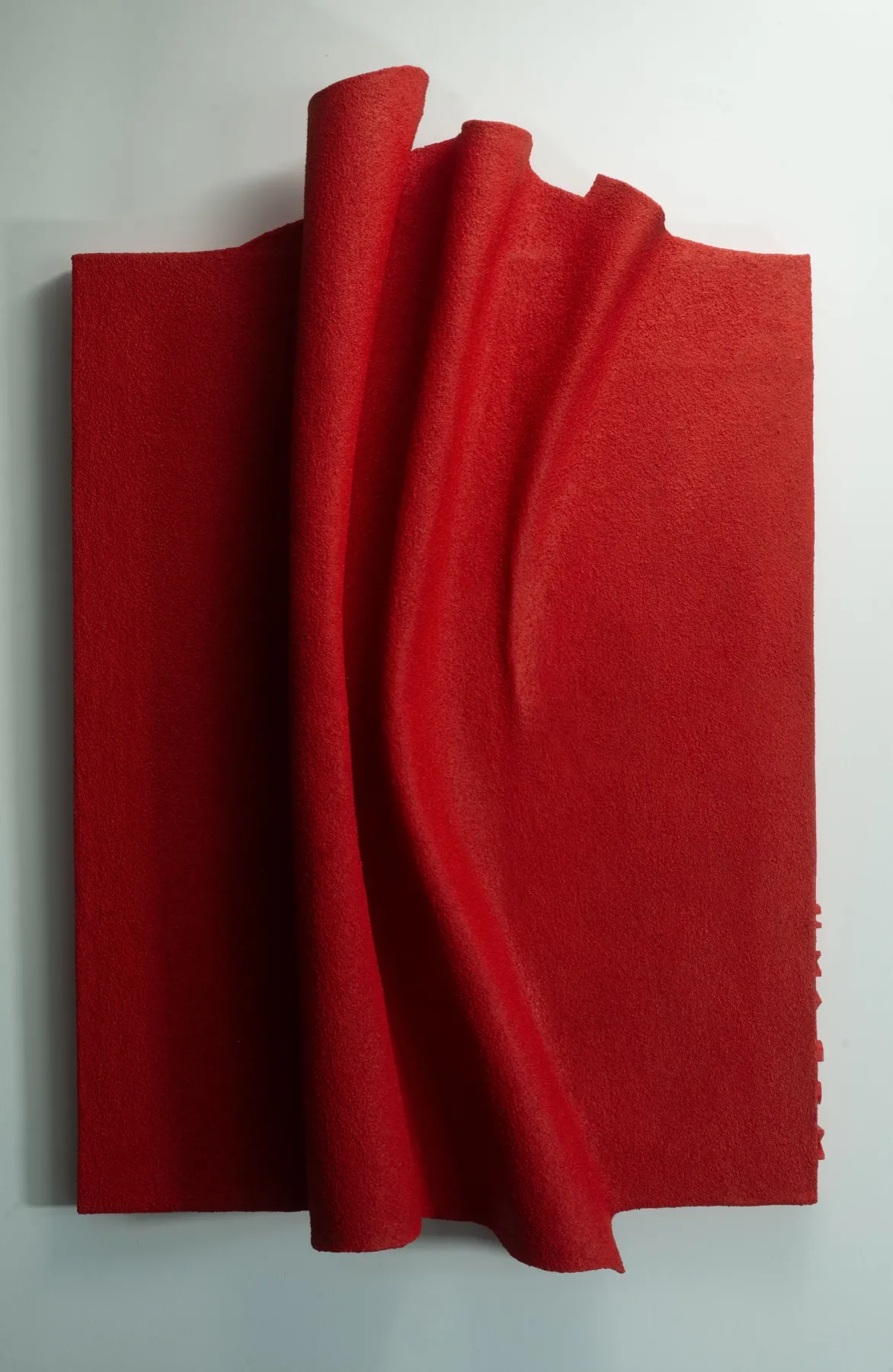
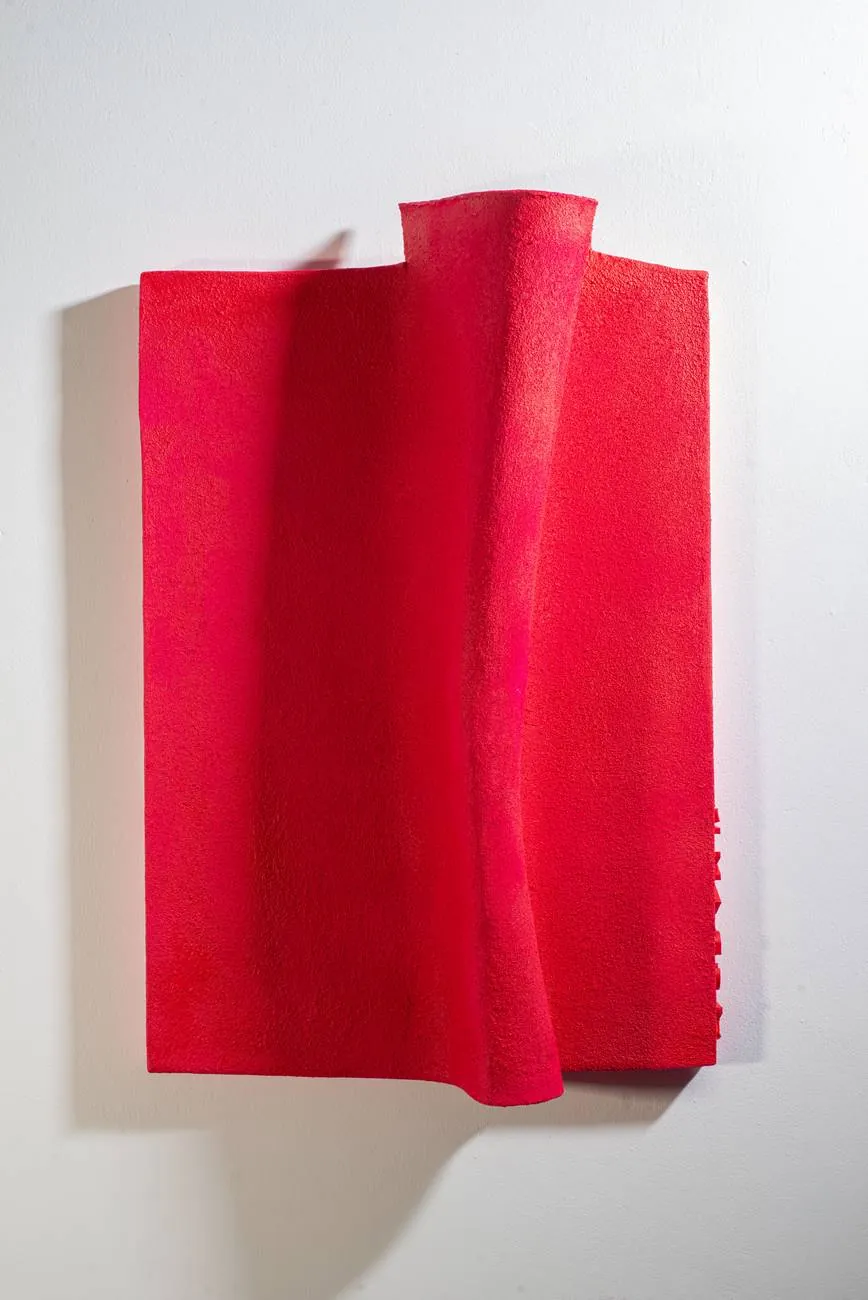
Dormire accozzati, 2026, red industrial felt folded against the wall
Dormire accozzati, 2026. Industrial felt on canvas, 110 × 70 × 15 cm.

Works

Thirteen works, 2025–2026. Dimensions in centimetres: height × width × depth.

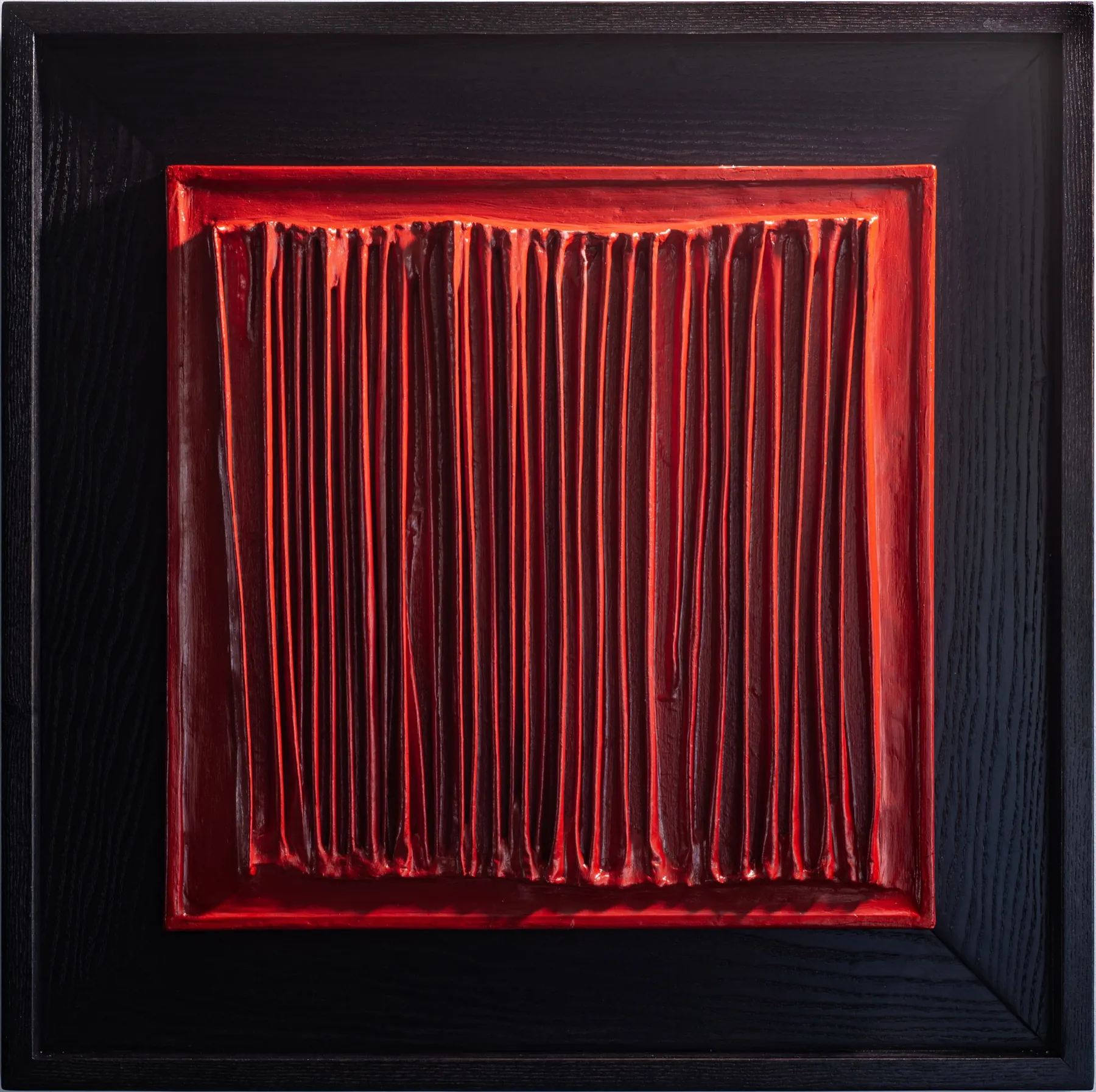
Le ferite dell’anima, 2026, front view
front view

Le ferite dell’anima

Year
2026
Dimensions
70 × 70 cm
Technique
Mixed media on canvas — acrylic and gloss medium, relief; ash box frame

An intense, almost visceral red: the colour of blood, of life, but equally of acute pain and suffering. It stands for the vulnerability of a soul laid bare — not a concealed pain but a living one, pulsing and aflame. The material texture and the dense vertical folds generate a powerful sense of laceration and depth, legible as scars and rents: the vertical lines evoke deep incisions, open wounds, or flaps of skin and of soul that overlap in the attempt to close. The thick, geometric black frame performs an essential function — it signifies darkness, void, or rationality, rendering the solitude of suffering all the more conspicuous. The work confers form upon the complexity of inner pain. It describes not a superficial suffering but a structural wound, profound and intimate, wherein the beauty of art becomes the means to grant visible, tangible form to that which ordinarily cannot be seen: the pain of the soul.
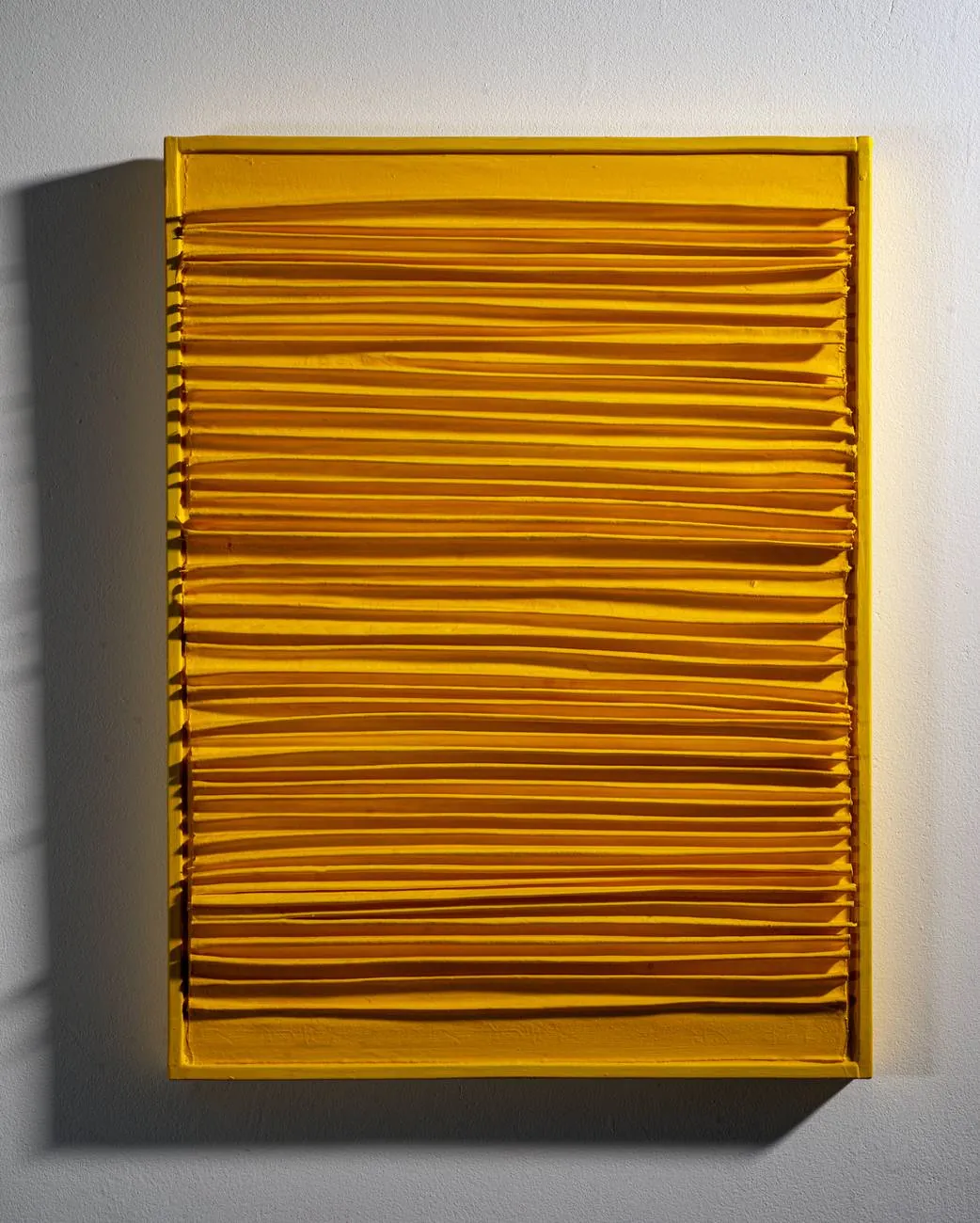
Yellow, 2026, front view
front view

Yellow

Year
2026
Dimensions
60 × 45 cm
Technique
Pleated canvas and acrylic

Conceived in dialogue with Le ferite dell’anima, the work inverts its premise. The same dense folds — vertical and open in the earlier piece — are here rotated to the horizontal and closed, their edges gathered into small loops that read as sutures. The red of the wound yields to a saturated yellow, which continues tone on tone across the edge of the canvas and encloses the work like a frame: the healing has taken place. Raking light traverses the folds and allows them to breathe. Yellow thus becomes the colour of renewal — of joy, of radiance, of a body made whole once more.

Dormire accozzati, 2026, front view
front view

Dormire accozzati

Year
2026
Dimensions
110 × 70 × 15 cm
Technique
Mixed media — industrial felt on canvas

A sheet of red industrial felt folds against the wall like a single blanket drawn over bodies sleeping pressed together — interlocked not for want of space, but in search of warmth. Its cut upper edge forms an uneven line of heads; each fold is a body conforming to the contour of the next in symbiosis, finding its place solely through contact. The last and deepest fold closes about the others, gathering the whole to itself in a single embrace. Dormire accozzati — sleeping cuddling, pressed together. Soft where sculpture is customarily hard, the work compresses an entire crowded sleep into a single red mass: no figures are shown, only their pressure.

Risveglio, 2026, front view
front view

Risveglio

Year
2026
Dimensions
70 × 50 × 17 cm
Technique
Mixed media — industrial felt on canvas

Conceived as a sequel to Dormire accozzati: where the earlier work gathered folds of red felt like bodies pressed together in sleep, here a single fold remains. It detaches itself from the picture plane, rises beyond the upper edge and lifts vertically, like a figure rising to her feet. Smaller yet more projecting, it occupies space with resolve. The red of intimacy is transposed into a fluorescent fuchsia — artificial and incandescent — that demands to be seen. This solitude implies no loss: it is the figure of a woman who, the shared sleep over, rises and presents herself.

Falde, 2025, front view
front view

Falde

Year
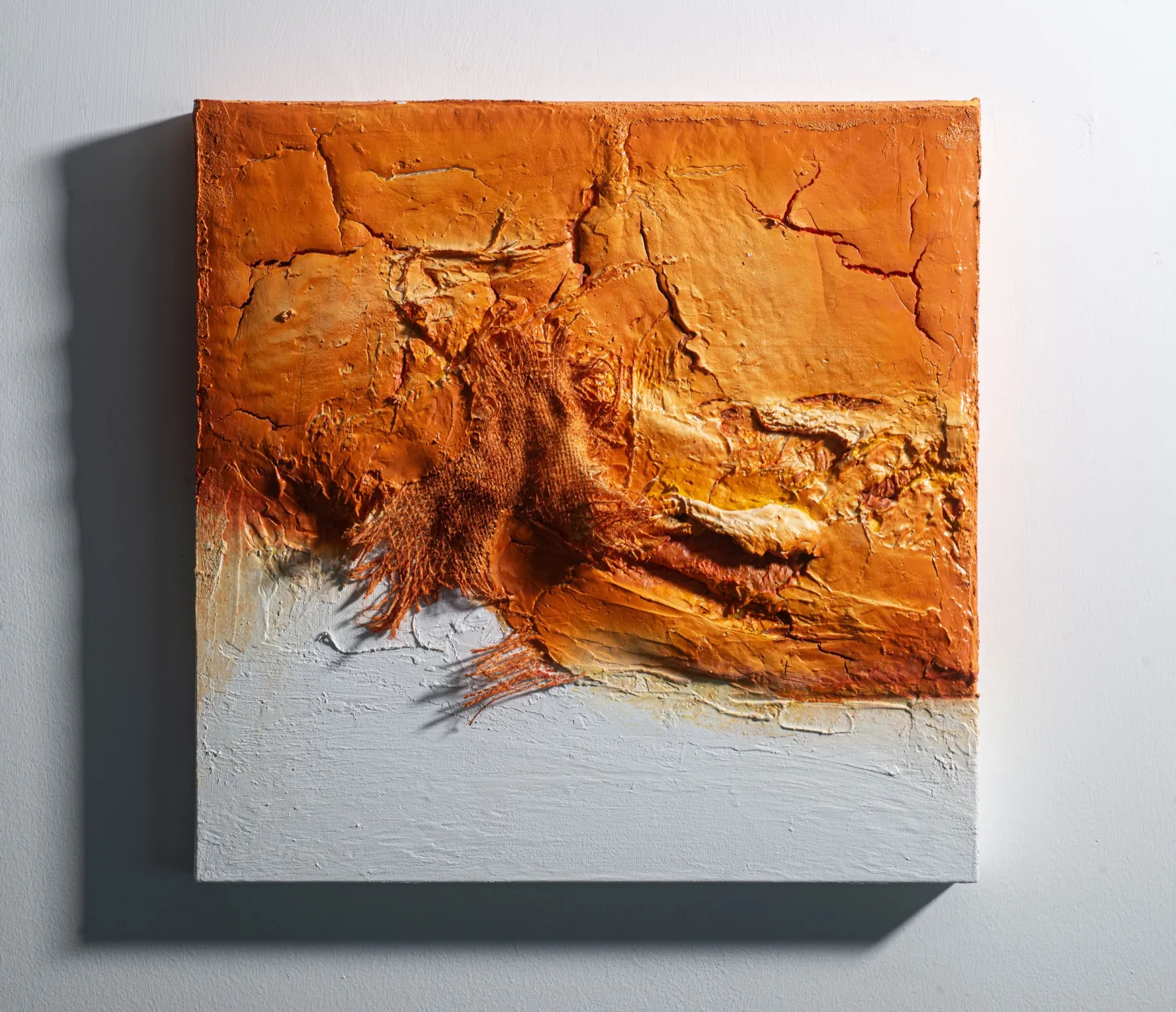
2025
Dimensions
40 × 40 cm
Technique
Mixed media on canvas — orange pigment, jute, gesso

A scorched epidermis of saturated, flaming orange constitutes the uppermost register: the stratum of fire, the most exposed layer, riven by heat and fractured over time into a dense lattice of fissures — at once arid earth and cooled lava, a crust that bears downward with an almost corporeal gravity. At the precise centre of this tension emerges the stratum of fibre: the raw jute is no discrete element but a fold of the terrain itself, a flap of crust — or of skin — that rises and unravels beneath the tectonic pressure between the two zones, casting literal shadow. Below, the stratum of silence responds: a chalky white, static and composed, its surface coarse yet ordered, where the absence of colour opens an absolute void. The work resides precisely at this line of rupture, as the jute appears to subside, descending from the turbulent, incandescent zone above into the silent purity of the one below. Viewed in profile, the painting discloses its depth: the fissures in the orange become apertures onto the strata beneath, while the jute serves as a three-dimensional bridge between turbulence and repose. It does not merely solicit the gaze — it asserts its physical presence through relief, fracture, and the weight of its own skin.

Intervallo, 2026, front view
front view

Intervallo

Year
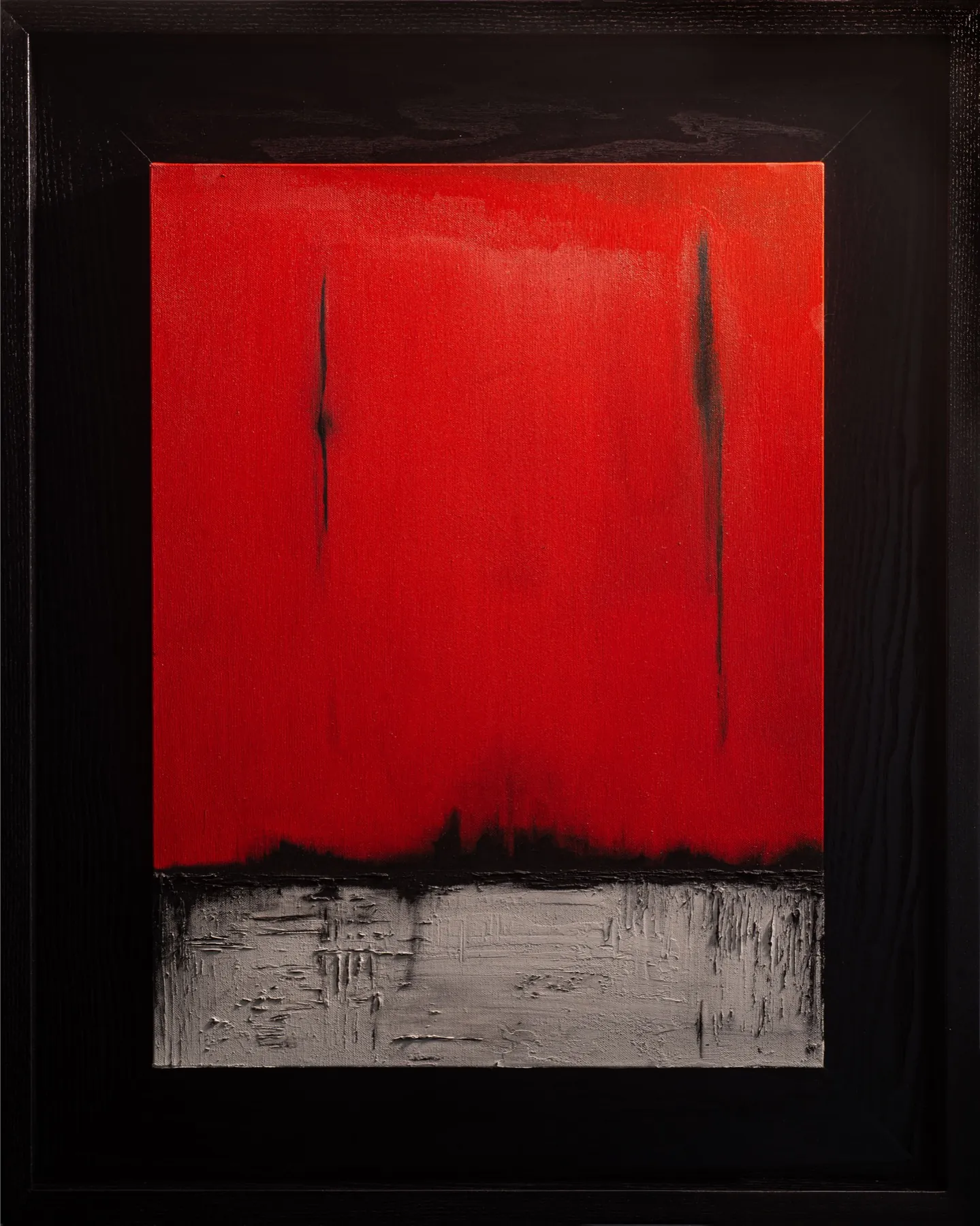
2026
Dimensions
80 × 66 cm
Technique
Mixed media — gesso and acrylic on canvas; ash box frame

A saturated red field spreads over the greater part of the surface and halts abruptly at a dark, jagged band, beneath which a band of white matter falls silent. Two slender vertical marks suspended within the red constitute the sole events in an otherwise motionless expanse. Intervallo denotes the pause itself, and here it is twofold: the horizontal void of the black band that severs the transition between the white matter and the incandescent ground, and the vertical void between the two marks. Neither the red nor the white, but the narrow seam in which one yields to the other: the painting holds that interval open and never discloses which side we are departing and which we are about to enter.

Cesura, 2026, front view
front view

Cesura

Year
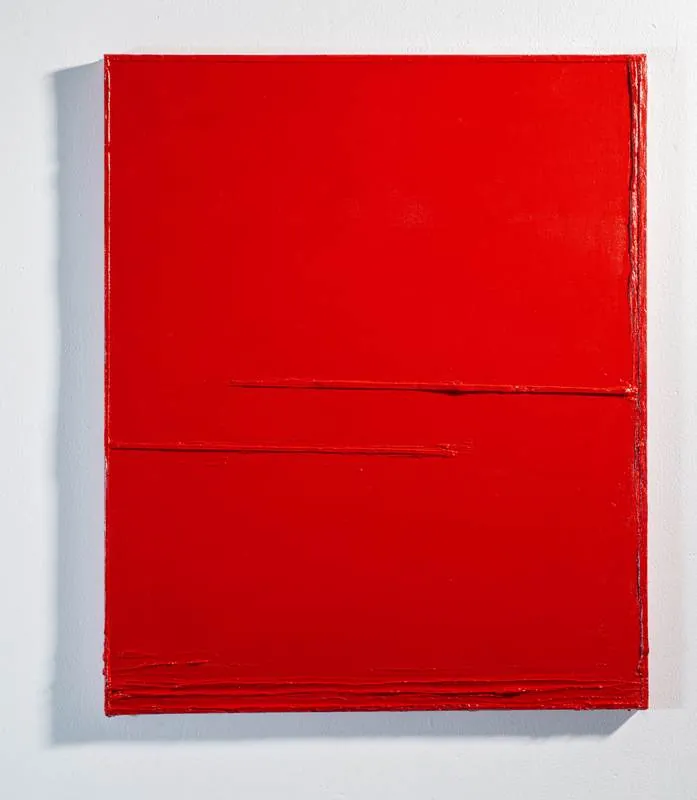
2026
Dimensions
60 × 50 cm
Technique
Mixed media — gesso and acrylic on canvas

A field of unbroken red, interrupted by two raised lines that never meet and closed at its base by a stratification of matter. As in Intervallo, the only events within the field are its caesurae.

Aurora Boreale, 2026, front view
front view

Aurora Boreale

Year
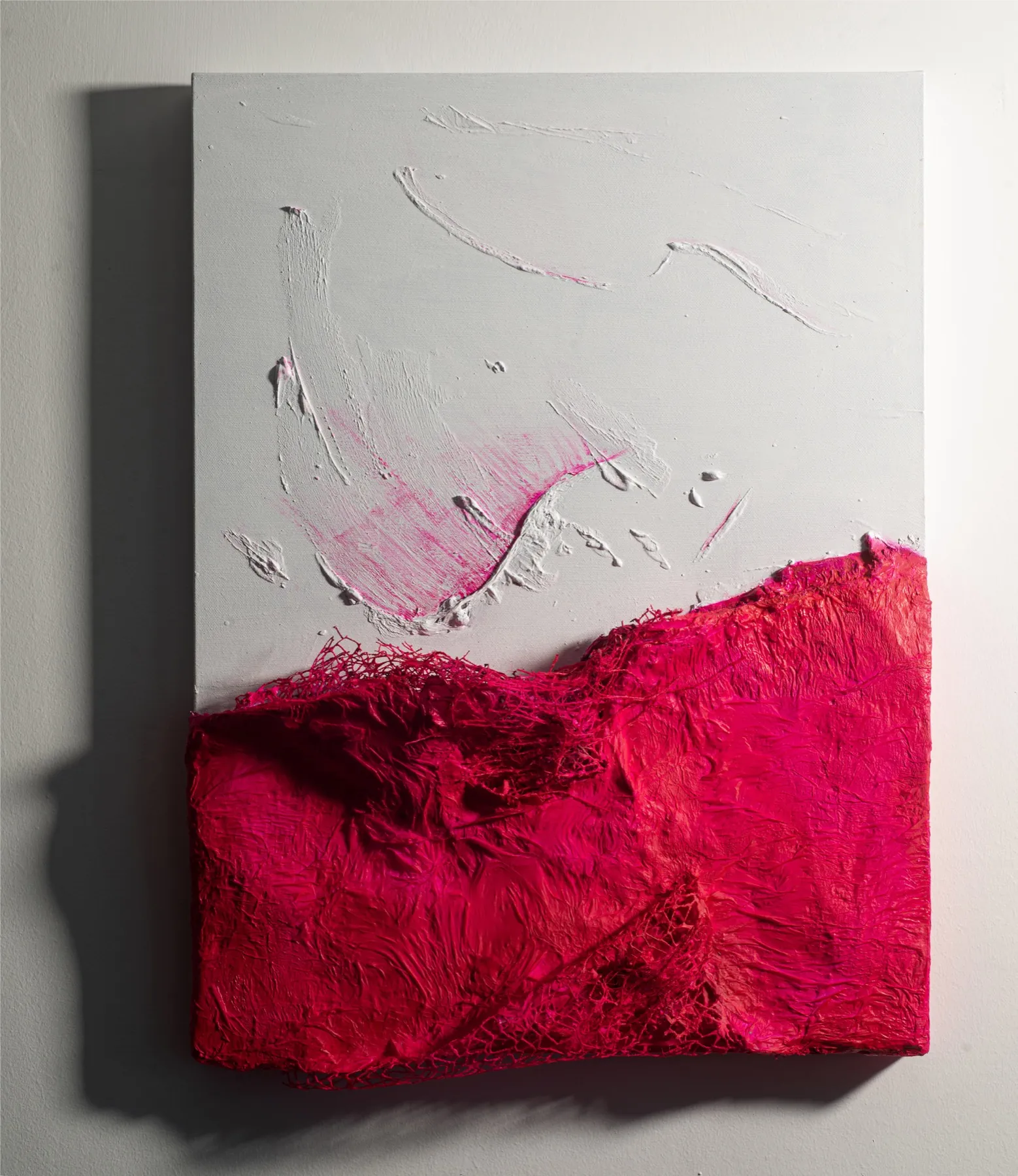
2026
Dimensions
60 × 45 cm
Technique
Mixed media on canvas — fluorescent pigment, tissue paper, netting

The work evokes a poetic, abstract landscape, divided horizontally into two chromatic and material forces — distinct, yet in dialogue. The lower section is governed by a dense, vivid expanse of bright pink, its coarse, crumpled, three-dimensional surface eliciting the primordial force of the earth, or a field of ice illuminated by the sun. This rich, undulating matter appears to pulse from below, driving its energy upward. In marked contrast, the upper half opens onto a white ground — ethereal and serene — that stands for the sky. Upon this ostensibly minimal surface the artist intervenes with decisive incisions and veils of colour: white palette-knife strokes and rose tonalities that appear to hover in the air. It is here that the title, Aurora Boreale, attains its full force: the traces of pink render that phenomenon of suspended, rarefied, almost mystical light. The work thus relinquishes all potential drama to become a vehicle of wonder — an abstract apprehension of the precise moment in which light breaches the silence of the night, kindling the landscape with a sudden enchantment.

Linfa, 2026, front view
front view

Linfa

Year
2026
Dimensions
60 × 45 × 19 cm
Technique
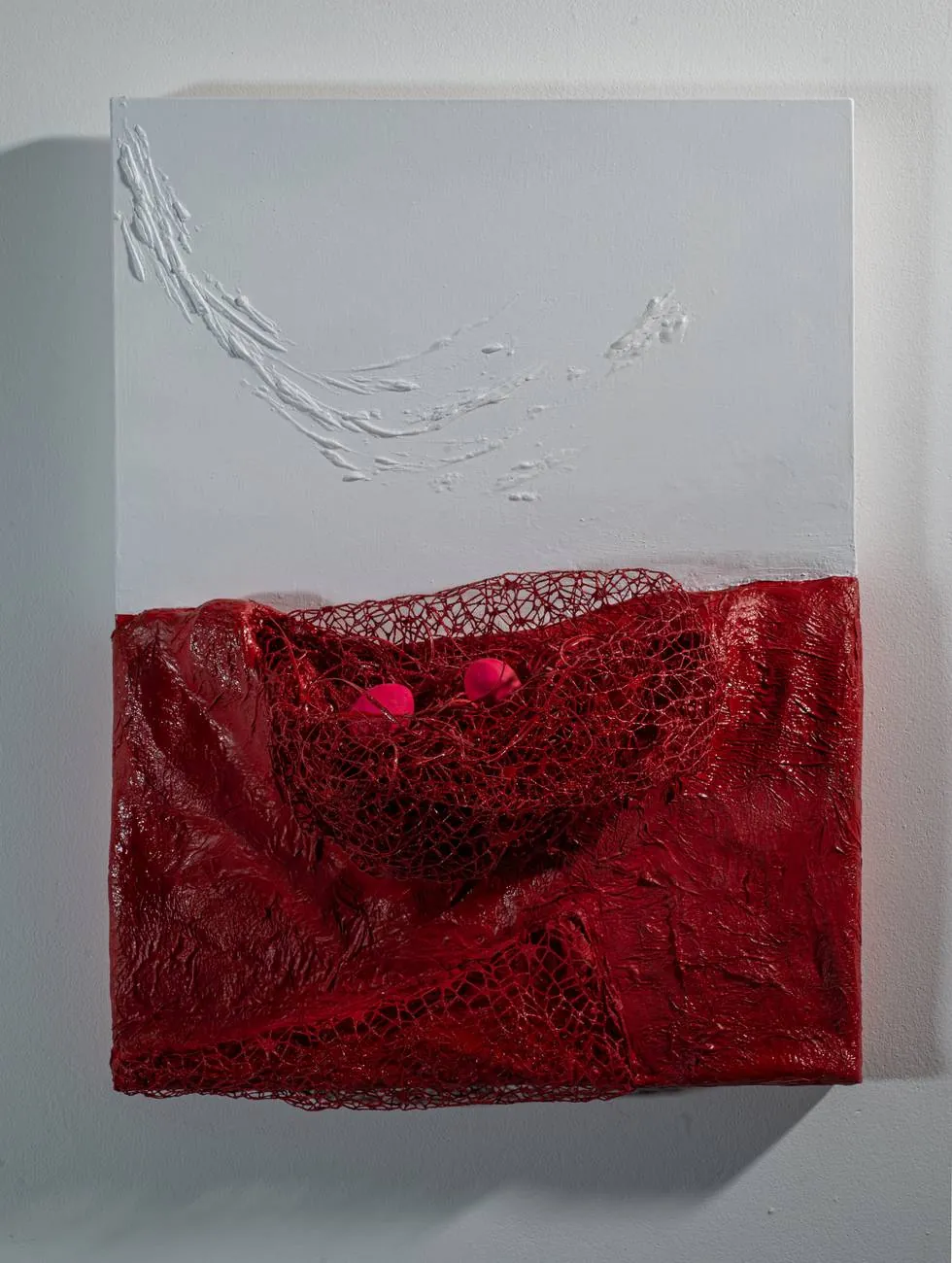
Mixed media on canvas — gesso, paper and netting; acrylic with matt and gloss finish

Above, a white field traversed by a single gesture in relief, as light as a breath. Below, a lacquered red mass gathers into folds like living flesh. At the centre, the red netting lifts to form a nest: a woven womb of vessels that receives and nourishes two fuchsia forms. The title names the vital sap that passes from the maternal body to that which is yet to grow — warmth and substance at once. Here red does not wound; it protects and sustains.

Immigration, 2026, front view
front view

Immigration

Year
2026
Dimensions
60 × 50 cm
Technique
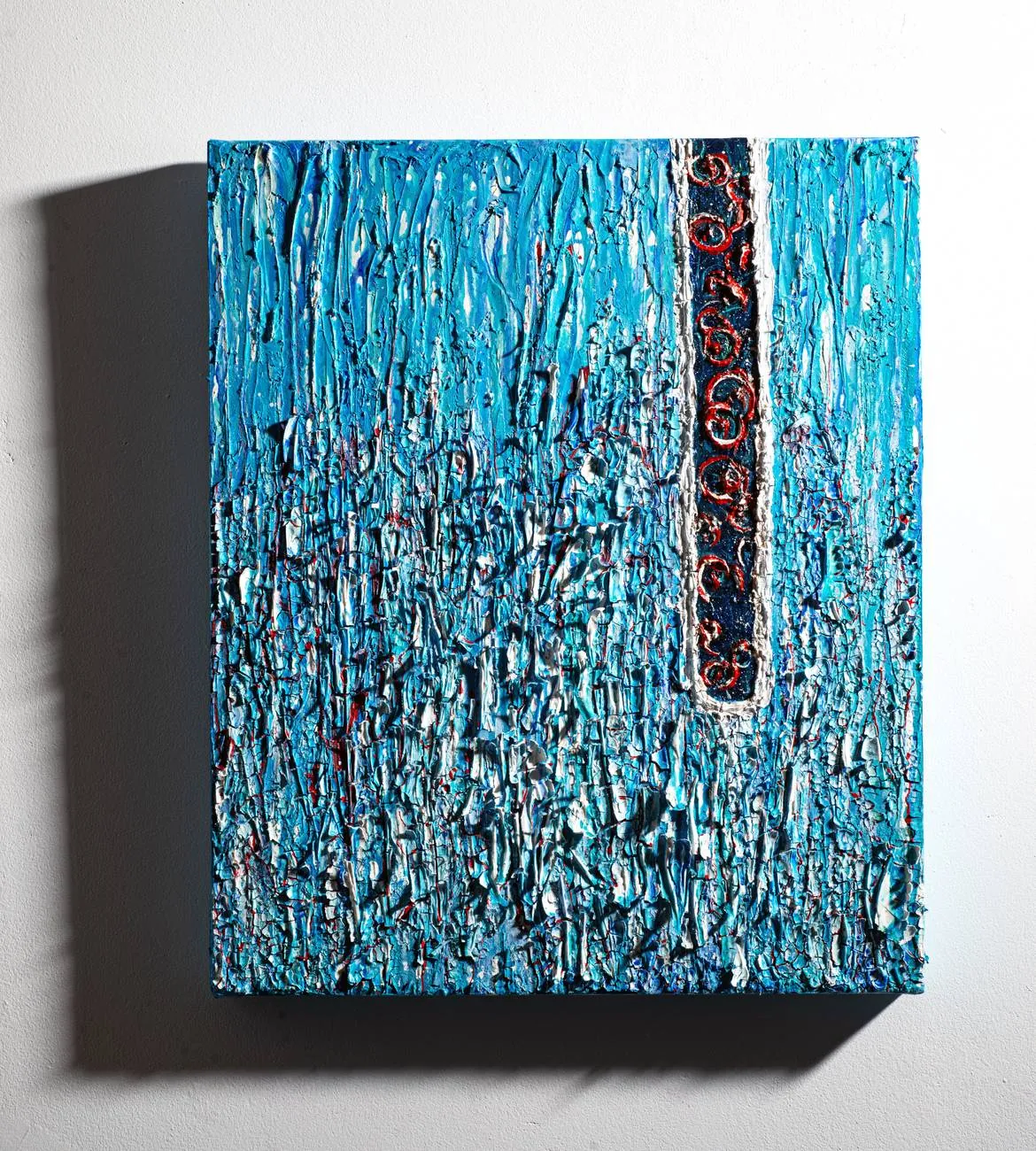
Mixed media on canvas

The sea is constructed in strata: crests of matter that rise and break, white flakes of foam, blues that slide into turquoise and deep blue. Between the waves, red surfaces in filaments and stains — the blood of those who crossed these waters in search of a better fortune and never arrived. In the upper right, a band of turbid blue opens a view onto the seabed. There the red circles gather side by side: different men who set out with the same hope of a better life, united by a single fate.

Filo rosso, 2025, front view
front view

Filo rosso

Year
2025
Dimensions
40 × 40 cm
Technique
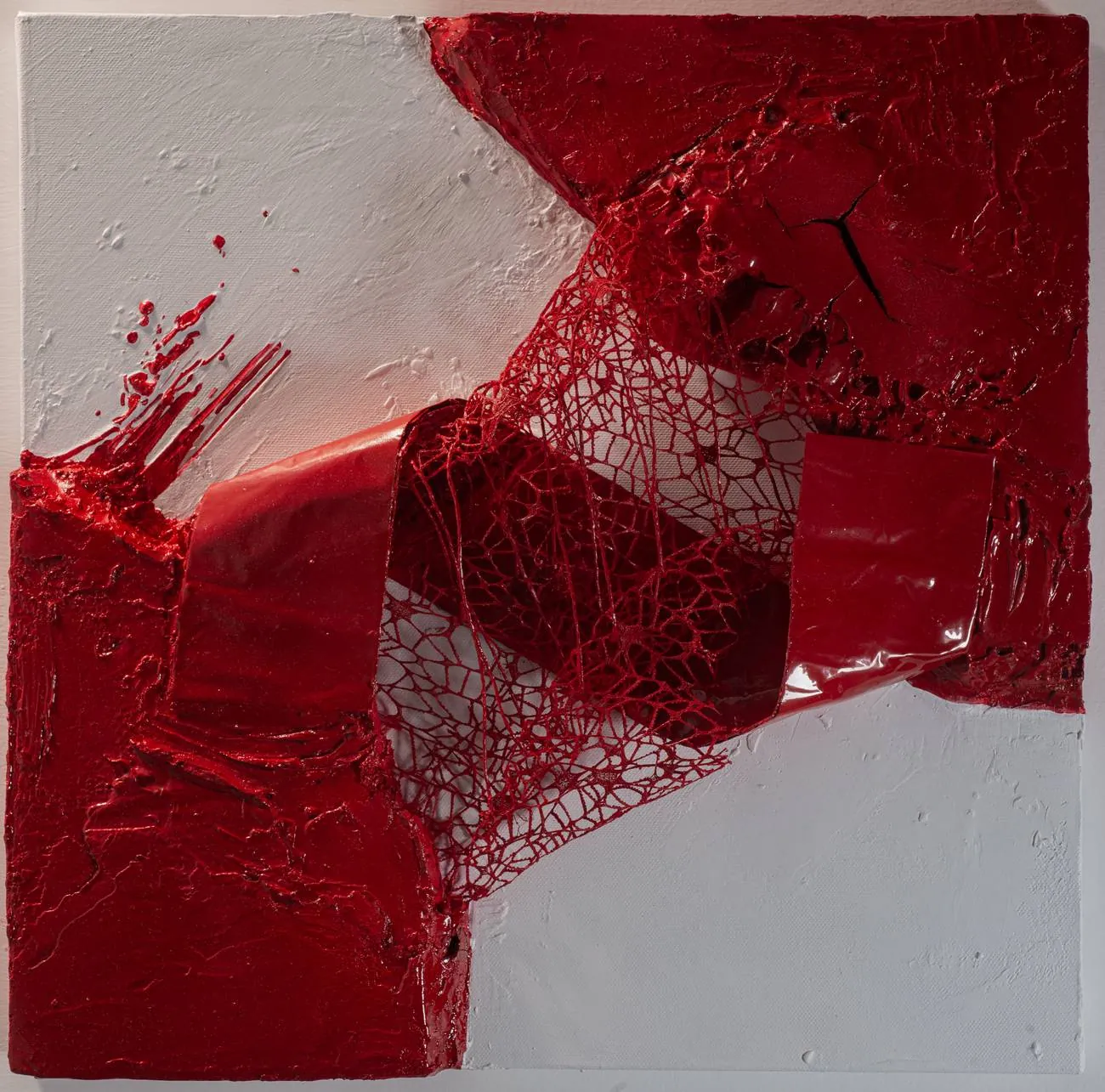
Mixed media on canvas — polystyrene, gesso and netting; gloss spray paint

Two red masses, lacquered and fissured, occupy opposite corners of a white field. Between them runs a glossy red ribbon that coils upon itself, drawing a fine netting like a tissue of veins stretched between two bodies. It is the thread that binds distant destinies: it holds, even though on the left the colour spatters across the white and leaves the trace of a rupture.

Brace, 2025, front view
front view

Brace

Year
2025
Dimensions
50 × 50 cm
Technique
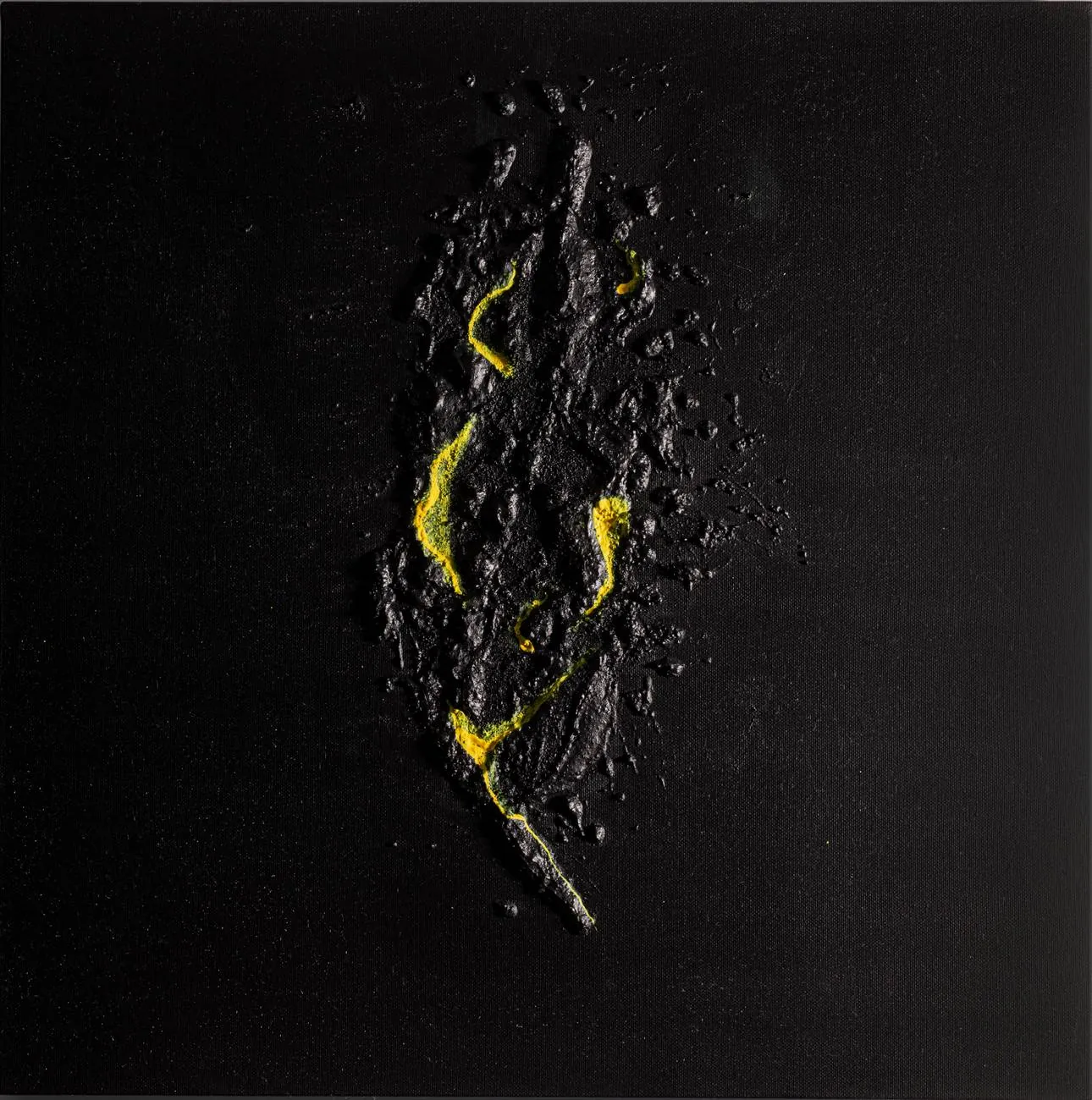
Mixed media on canvas

From an absolute black rises a mass of dense, granular matter, like extinguished coal. Veins of vivid yellow surface within its fissures: embers smouldering beneath the ash. What appears spent still retains its heat, ready to rekindle.

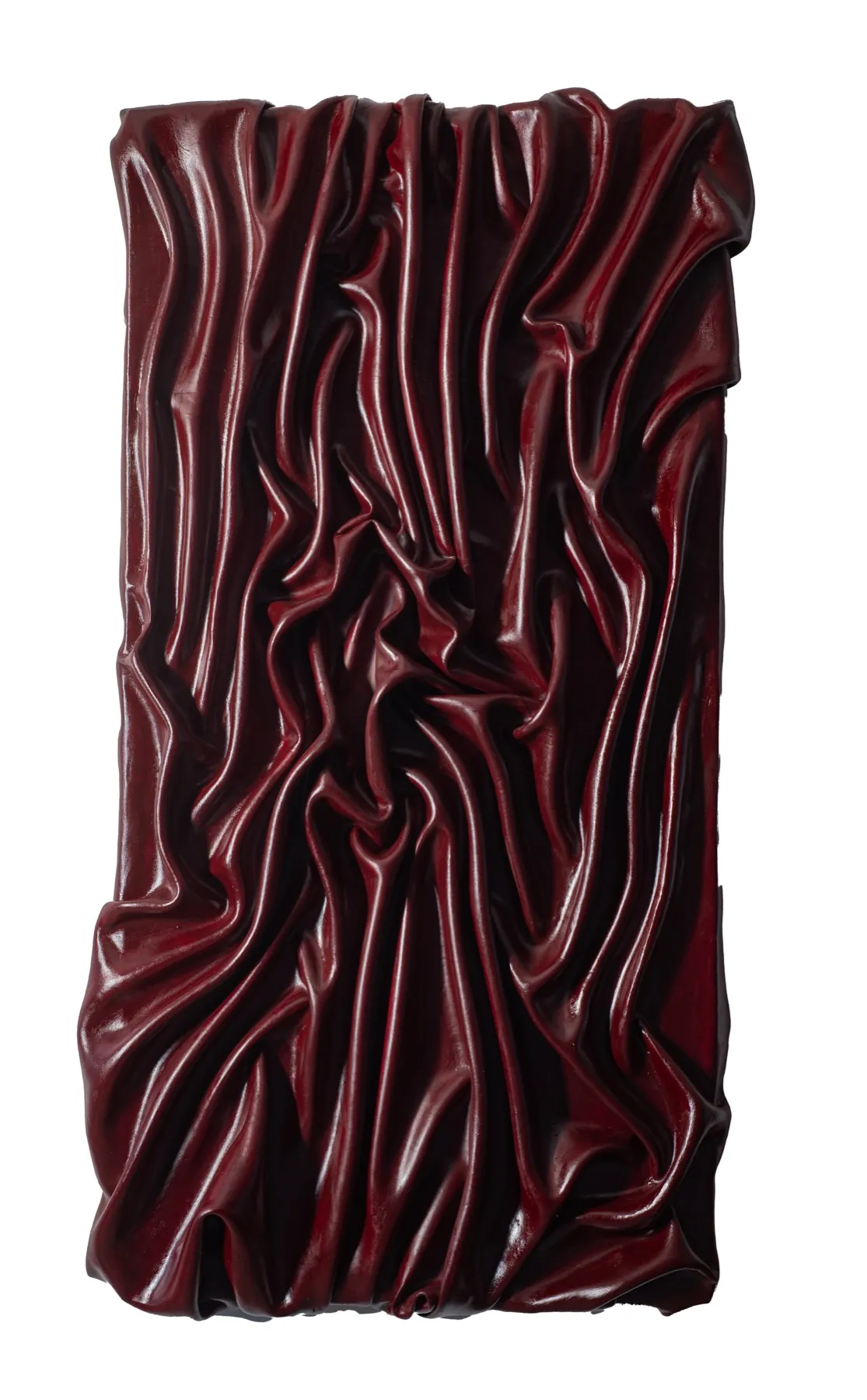
La virtù dell’inganno, 2025, front view
front view

La virtù dell’inganno

Year
2025
Dimensions
122 × 68 × 12 cm
Technique
Mixed media — relief on canvas and fabric, acrylic and gloss medium

The work presents itself as a dense, vertical drapery in a deep burgundy hue tormented and scarlet. Its glossy finish heightens the stark chiaroscuro contrast between the illuminated reliefs and the geometric shadows cast within the recesses. The movement of the drapery — chaotic at the centre and unfurling toward the edges — generates a dynamic energy reminiscent of the Baroque. The folds appear to be pushed from within, suggesting the presence of an invisible force or a concealed body; yet, it is the title itself that provides the conceptual key to unveiling its illusory nature. The artist manipulates the medium to replicate the transient suppleness of fabric or leather, freezing this inherent fluidity into a solid, inert, and timeless structure. The artwork thus becomes a meditation on the deception of perception: while the eye registers movement and pliancy, the mind recognises the rigidity of the sculpture, thereby celebrating the age-old power of art to falsify reality in order to reveal a new aesthetic truth: Material Illusion.

Vincenza Luppino, who works under the name Meravì, seated on a sofa in a white shirt

Vincenza Luppino

Lives and works in
Reggio Calabria, Italy
Born in
Palmi, Calabria, Italy
Profession
Architect and visual artist

Statement

Meravì works with red as a bodily substance — blood, flesh, heat, the open wound. It is never merely a colour: each surface is apprehended in a single gesture — folding, cracking, fraying, swelling from the wall — whereby the chromatic field becomes a body laid bare, encountering its own emptiness in the white or black that surrounds it. She moves through the idioms of post-war Italian abstraction — the extroflexion of Spatialism, the scorched and frayed matter of Arte Povera, the silent field of colour-field painting — sustaining them within a single register of red, in which a synthetic, almost fluorescent intensity draws those historical languages into the present.

Biography

Vincenza Luppino, who works under the name Meravì, is an architect and visual artist. Her training in architecture informs a poetics in which the pictorial surface is a three-dimensional field of forces: the painting becomes a plastic construction.

She stratifies acrylic pigments, modelling pastes and raw or industrial materials — frayed jute, pressed paper, felt — into tactile topographies and dramatic folds that respond to light; vertical grooves and geometric incisions punctuate the surface, translating architectural rigour into visual rhythm.

Her palette begins with red — vivid red, burgundy, magenta, fuchsia — which remains at the centre of her research, and opens onto other registers: the burnt orange of the earth, the blue of the sea, the full yellow of light and of healing. Black is no longer merely a ground but matter, from which embers surface. Set against material whites or dark fields, each colour heightens the cast shadow: colour carries structural weight, and the work becomes an architecture of light and shade, an experience at once visual, kinetic and sensorial.

1 / 13

Le ferite dell’anima

2026, 70 × 70 cm

View catalogue entry

Yellow

2026, 60 × 45 cm

View catalogue entry

Dormire accozzati

2026, 110 × 70 × 15 cm

View catalogue entry

Risveglio

2026, 70 × 50 × 17 cm

View catalogue entry

Falde

2025, 40 × 40 cm

View catalogue entry

Intervallo

2026, 80 × 66 cm

View catalogue entry

Cesura

2026, 60 × 50 cm

View catalogue entry

Aurora Boreale

2026, 60 × 45 cm

View catalogue entry

Linfa

2026, 60 × 45 × 19 cm

View catalogue entry

Immigration

2026, 60 × 50 cm

View catalogue entry

Filo rosso

2025, 40 × 40 cm

View catalogue entry

Brace

2025, 50 × 50 cm

View catalogue entry

La virtù dell’inganno

2025, 122 × 68 × 12 cm

View catalogue entry